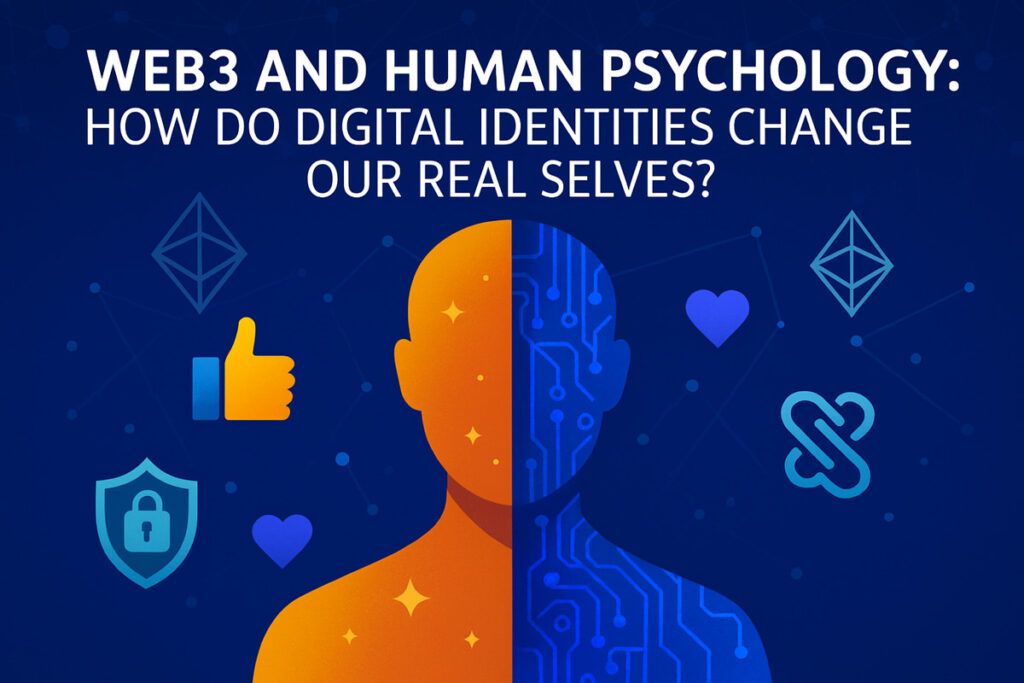
As humans, throughout history, we have built our identity through the environment we live in. Family, society, profession, and culture… all of them have shaped the answer to the question “Who am I?”. Today, however, it is time to ask this question again:What is my digital identity?
With Web3, digital identity is no longer just a username or a profile picture; it is transforming into an entity that carries economic, social, and psychological meanings. So how does this transformation affect our real selves? In this article, we will examine how digital identities influence and change our real identities. For more detailed and in-depth analyses, readers are encouraged to visit Web3 Unplugged.
Our Digital Identities
During the Web2 era, digital identities were generally limited. Social media profiles, posts, and followers… These often existed as a reflection of real life or a filtered version of it. However, with Web3, digital identities are becoming more permanent, more owned, and more “mine.”Wallet addresses, NFTs, DAO memberships, and on-chain history form a person’s reputation in the digital world. These identities can be sold, transferred, and even inherited. Therefore, digital identity is no longer a mask, but has become an extension of personality.
At this point, a psychological threshold is crossed: a person no longer merely represents their digital presence, but begins to identify with it.
Sense of Ownership and Self Perception
One of the strongest promises of Web3 is “ownership.” Owning content, data, and identity… From a psychological perspective, ownership directly affects self-perception.People tend to see the things they own, consciously or unconsciously, as part of themselves.
An NFT collection, voting rights in a DAO, or a digital avatar gradually ceases to be just a tool and becomes part of “who I am.” This can be positive, but it is also risky.Because a loss experienced in the digital world, damage to reputation, or exclusion can also disturb psychological balance in the real world.
But Is This Freedom?
Web3 advocates argue that digital identities offer individuals freedom. Roles that cannot be experienced in real life can be explored in the digital world. People can express themselves more comfortably here and break free from social norms.
This is true. However, it also carries a risk: the fragmentation of the self.
A person who is introverted in real life may have a very active and powerful identity in the digital world. As the gap between these two identities widens, the individual begins to question which one is “real.” In the long term, this can lead to identity confusion and a sense of dissatisfaction.
Community Psychology and Belonging
In the Web3 world, the community is as important as the individual. DAOs, NFT communities, and on-chain networks offer people new areas of belonging. Psychologically, belonging creates feelings of security and meaning.
However, this belonging is sometimes conditional. When token values fall, projects fail, or internal conflicts increase, these bonds can quickly break. This can create disappointment and insecurity in individuals.
Relationships in real life are built slowly but are deep. Digital communities, on the other hand, are formed quickly but are fragile. This difference can cause fluctuations in human psychology.
Can It Cause Psychological Pressure?
Yes. In Web3, everything is on-chain: transactions, contributions, earnings, votes. While this transparency may seem fair at first glance, it can also create psychological pressure. Constantly being visible, feeling the need to prove performance, and having to produce value can lead to burnout.
Especially narratives such as “I joined early,” “I made a lot of money,” and “I have influence in the community” can trigger comparison and feelings of worthlessness among individuals. This situation is a more sophisticated version of the social media pressure seen in Web2.
Is Our Digital Self Permanent?
Yes. What is done in Web3 is unforgettable. On-chain history cannot be erased. This can make individuals more careful in their behavior; however, it also increases the fear of making mistakes. Making mistakes is necessary for psychological growth. The constant sense of permanence can lead to avoiding risks.
For this reason, the permanence of digital identities can be as limiting as it is liberating.
So, Who Controls Our Identity?
The real question is this: Do digital identities represent us, or are we becoming them?
Digital identities offer freedom, ownership, and belonging, but at the same time they can create pressure, fragmentation, and fragility. In fact, everything depends not only on how Web3 is designed, but also on the conscious relationship individuals build with this world. A digital identity that strengthens the real self enriches a person. A identity disconnected from reality, on the other hand, isolates.
Web3 may be shaping the future. But human psychology still has to be our compass.
Contributed by GuestPosts.biz